
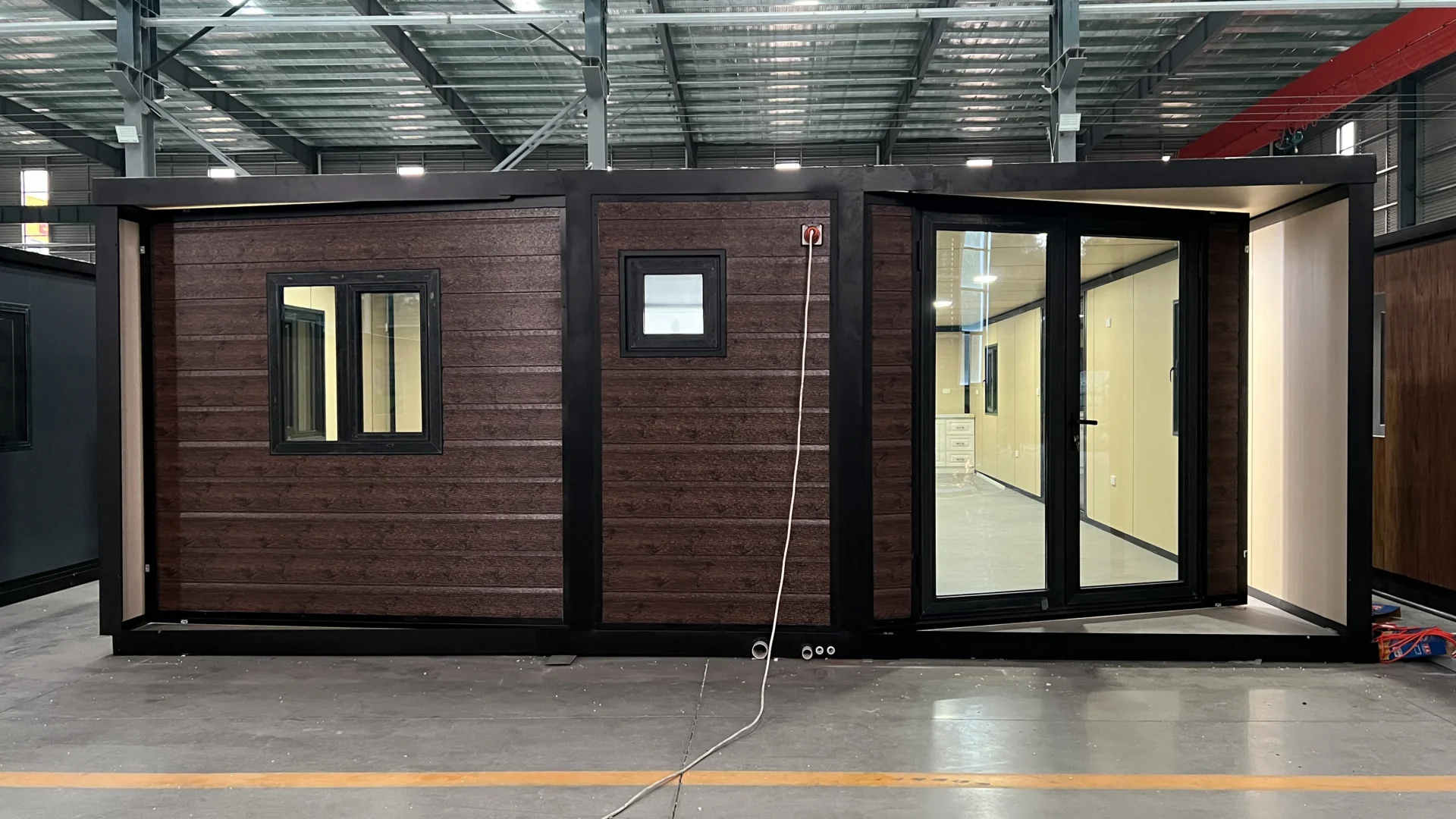
Every glamping business case eventually comes down to one number that spreadsheets love and suppliers avoid: what does a cabin actually cost, all-in, once it is on your site and receiving guests? No honest supplier will quote that number blind — it depends on your lane, your ground conditions and your specification. What we can do is break the cost into its four real components and show where each one moves.
Component 1: The Cabin Mix
Capital cost starts with matching the model to the guest, because paying for floor area you cannot resell is the fastest way to sink unit economics. The composition we recommend most often:
| Guest type | Recommended models | Why |
|---|---|---|
| Couples / twin-share | F720 Compact, 20ft Expandable | Fast to open, complete one-room experience |
| Families | 30ft / 40ft Expandable | Multi-room, separate living zone |
| Camp infrastructure | Bathroom Pod, Kitchen Pod | Centralized wet areas and catering |
A 29.5 m² F720 cabin and a 74.8 m² 40ft villa serve different rates and different seasons — most resorts end up with a mix, weighted toward the compact end and topped with a few flagship family units. Facade and interior customization (110+ panel finishes, guest-ready interiors with bathroom and kitchen provisions factory-installed) is what turns the same chassis into a rate premium.
Component 2: Freight — the Per-Cabin Container Share
Ocean freight is quoted per container, so the question that matters is how many cabins share the ride:
- F720: folds to a 720 mm-wide profile — 6 cabins per 40HQ
- 10ft Expandable: 4 units per 40HQ
- 20ft Expandable: 2 units per 40HQ
- 30ft / 40ft: 1 unit per 40HQ or flat rack
The per-cabin freight share is simply the container quotation divided by those counts. At six cabins per container, the F720 carries one-sixth of the freight leg; a 40ft villa carries it alone. That is the trade you are pricing when you choose between volume cabins and flagship villas — and it is why remote and island resorts lean on the compact models. Phased deliveries matter here too: ordering in batches aligned to your opening schedule avoids paying to store cabins (or to re-truck them) while later site works finish. The full logistics picture, from packing to offloading, is on our glamping and eco-resort solutions page.
Component 3: Installation — Days, Not Months
Site cost is a function of time-on-site, and prefab cabins compress it:
- Crew: 3–4 persons for a 10ft, 4–5 for the F720 and 20ft, scaling to 6–8 for a 40ft
- Duration: 4–6 hours (10ft) to 10–12 hours (40ft) per unit; the F720 and 20ft sit at 6–8 hours
- Equipment: forklift or crane of 3–5 ton capacity for most models — no large crane mobilization on compact cabins
- Foundations: units install on simple foundations rather than continuous footings, which is often the difference that makes a sloped or sensitive site buildable
Compare that calendar to conventional cabin construction measured in months, and the real saving is usually not the daily rate of the crew — it is the seasons of revenue the resort does not lose.
Component 4: Running Costs — What the Building Itself Consumes
The specification choices that drive operating cost are made before production:
- Insulation: 75 mm EPS sandwich panels as standard, with rock wool or PU upgrade options — the difference between heating a cabin and heating the outdoors in shoulder seasons
- Energy: solar panels, inverter and battery storage are optional packages; for off-grid sites they compete with generator fuel and grid extensions, and cabins with a 12 kW electrical ceiling size their energy systems predictably
- Climate control: air conditioning and ventilation packages are configured per climate
- Durability: galvanized steel frames and insulated roof systems are standard across the range, and wind ratings run from Grade 10 (240 km/h) up to Grade 12 (320 km/h) on the 40ft — relevant to insurance as much as to uptime
The Revenue Side: A Simple Framework
We do not publish revenue figures — they are yours to build — but the framework resort operators use is compact enough to share. Annual cabin revenue = nightly rate × occupancy × operating nights. Cabin-level profit is that figure minus an allocated share of (unit cost + freight + site works + energy + maintenance). The two levers a factory actually influences are the cost side (via loading density and installation speed, above) and the rate side (via facade, layout and finish decisions that support premium pricing). Bring us your ADR assumptions and we will tell you honestly which model in the range matches them — the decision should survive a spreadsheet.
Scaling Without Closing
One structural advantage of the flat-pack resort: expansion does not require shutdown. Cabins arrive as finished units and open on their own pads, so a resort can add six cabins before a high season without closing the existing ones. Operators typically start with a compact phase, read the occupancy data, then scale the mix — and the resort project program supports exactly that pattern, from cabin mix proposal to phased delivery scheduling. MOQ, lead times and warranty terms are confirmed in quotation per phase.
FAQ
How many glamping cabins fit in a shipping container?
Six F720 compact cabins per 40HQ, four 10ft expandables, or two 20ft expandables. The compact models exist precisely to cut the per-cabin freight share for remote sites.
Do I need a crane to install resort cabins?
Usually not — most models offload with a forklift or crane of 3–5 ton capacity, and the 40ft villa is the exception requiring a 10-ton crane. Site works are limited to simple foundations.
Can cabins run off-grid?
Yes. Solar panels, inverter and battery storage packages are factory options, and the 12 kW-rated electrical system gives your energy designer a defined load ceiling to size against.