
Ask a prefab factory “which electrical standard do you build to?” and the honest answer is: whichever one you specify. Electrical systems are not generic — a socket, a breaker and a cable sheath are all market-specific hardware, and retrofitting them after delivery is expensive. This article explains how electrical packages are configured at our factory, what the base specification covers, and exactly which documents you should request for Australia, the US and Europe.
The Base Electrical Package
Across the expandable range (20ft, 30ft, 40ft) and both folding models, the factory electrical specification is: CE conformity, 12 kW maximum power, 63 A RCD + MCB protection, copper wiring. The 10ft and F720 compact models carry the same CE conformity at 12 kW with copper wiring.
Two elements of that line deserve unpacking:
- RCD + MCB protection. The residual current device trips on leakage faults — the failure mode that electrifies a wet bathroom floor — while the miniature circuit breakers protect individual circuits from overload. Combined 63 A RCD + MCB protection is the factory standard because most project layouts include wet areas.
- 12 kW maximum power. This is the designed load ceiling for the unit’s lighting, sockets, heating and appliance circuits — the figure your electrician needs when sizing the site supply and confirming the service connection.
One Chassis, Four Wiring Packages
The market-specific part — sockets, switches, cable color code, breaker configuration, distribution box layout — is selected as a EU, US, UK or AU wiring package in the unit’s optional configuration, alongside project-specific standards where a jurisdiction demands one. Specification locks at CAD stage, before the chassis is cut: changing an electrical package after production means opening finished walls.
This is why the first technical question we ask ADU developers and camp operators is simply “destination?” — a wholesale granny flat program supplying Queensland needs a different distribution box than a workforce camp in the same country, and both differ from a US backyard suite.
Australia: Component-Level Evidence
For Australian projects, the documentation that matters is component certification, and we maintain it certificate by certificate. The components fitted to AU-specification units — and displayed on our compliance and certifications page — include:
- Switched socket outlets certified to AS/NZS 3112 (SAA Approvals)
- Wall switches certified to AS 3133 (SAA Approvals)
- Circuit breakers certified to AS/NZS 60898.1 (SAA Approvals)
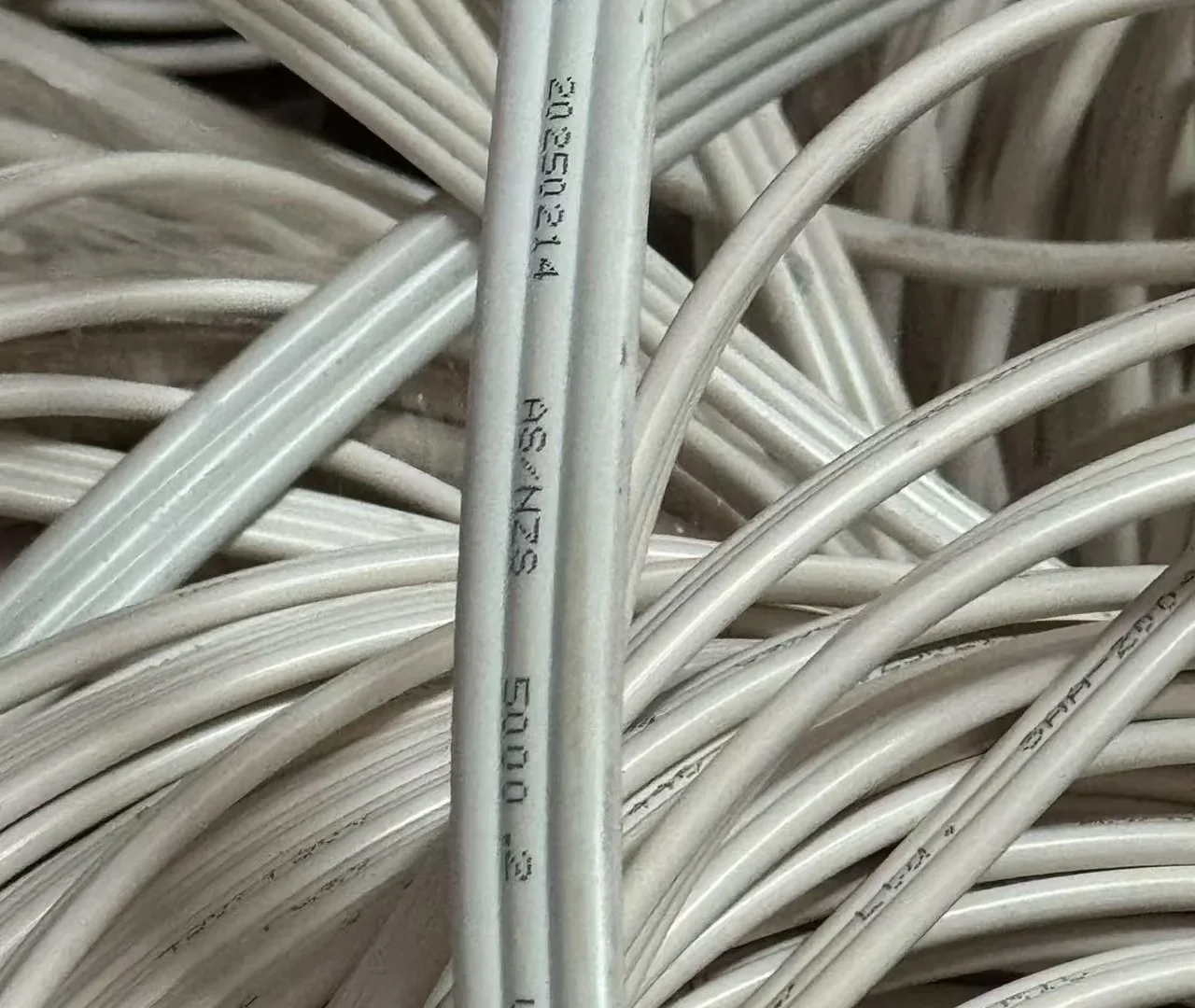
- Building wiring cable certified to AS/NZS 5000.2 — the cable sheath itself carries the SAA approval marking
- Wall and ceiling fans certified to AS/NZS 60335.2.80 (SAA Approvals)
- Plumbing and glazing for the wet areas: WaterMark-listed basin, tapware and PVC-U DWV fittings (AS/NZS 3718, AS/NZS 1260) and toughened safety glass to AS/NZS 2208
State the scope plainly, as we do on the compliance page: these are component-level certificates held by the part suppliers — “SAA-approved electrical components” and “WaterMark-listed components” — not a whole-of-building approval. Your local certifier and licensed electrician remain responsible for the installation sign-off under AS/NZS 3000 and the servicing rules in your state. What the component pack does is remove the sourcing risk: every critical part arrives with traceable, in-date evidence.
Europe and North America: What the Documents Cover Today
For EU-bound units, the electrical chain is supported by CE conformity documentation at component level — for example, instant electric water heaters tested to EN 60335-1 and EN 60335-2-35 (LVD + EMC), and wire and cable to EN 50525-2-31 (LVD). The unit-level package carries CE conformity as stated in the specification tables.
For North American projects, we configure the US wiring package — sockets, breakers and distribution hardware arranged to North American layouts — and supply the component documentation available for the specified parts. Certification expectations in the US and Canada are strict and project-specific, so raise them at specification stage: tell us the authority having jurisdiction and we will confirm in writing what documentation accompanies the shipment. We would rather scope this honestly before the order than discover it at the port.
What to Request with Your Quotation
Whatever the market, ask for the compliance pack alongside pricing:
- The electrical specification page for each model in your mix (package, 12 kW ceiling, RCD + MCB configuration)
- Component certificates applicable to your destination, with validity dates
- Third-party test reports where relevant — for example, the fiber-cement floor board report stating no asbestos detected, which Australian importers are frequently asked for
- Written confirmation of the wiring package locked at CAD stage
Warranty terms and MOQ are confirmed in quotation. If any certificate, standard or connection detail is missing from the pack, flag it before production — the cheapest time to change an electrical system is while it is still a drawing.
FAQ
Do the houses ship with RCD protection as standard?
Yes — the factory specification across the 20ft/30ft/40ft expandables and both folding models is a 63 A RCD + MCB-protected distribution box on copper wiring, rated to 12 kW maximum power.
Can one order mix different electrical standards?
Yes. The wiring package is a per-unit configuration selection (EU, US, UK, AU or project-specific), so mixed orders for different destinations are planned per project and confirmed in quotation.
Are the units certified for connection to the Australian grid?
Units use SAA-approved electrical components and arrive with the component certificate pack; final connection and sign-off are completed by a licensed electrician under the applicable state rules. There is no whole-of-unit approval document.