
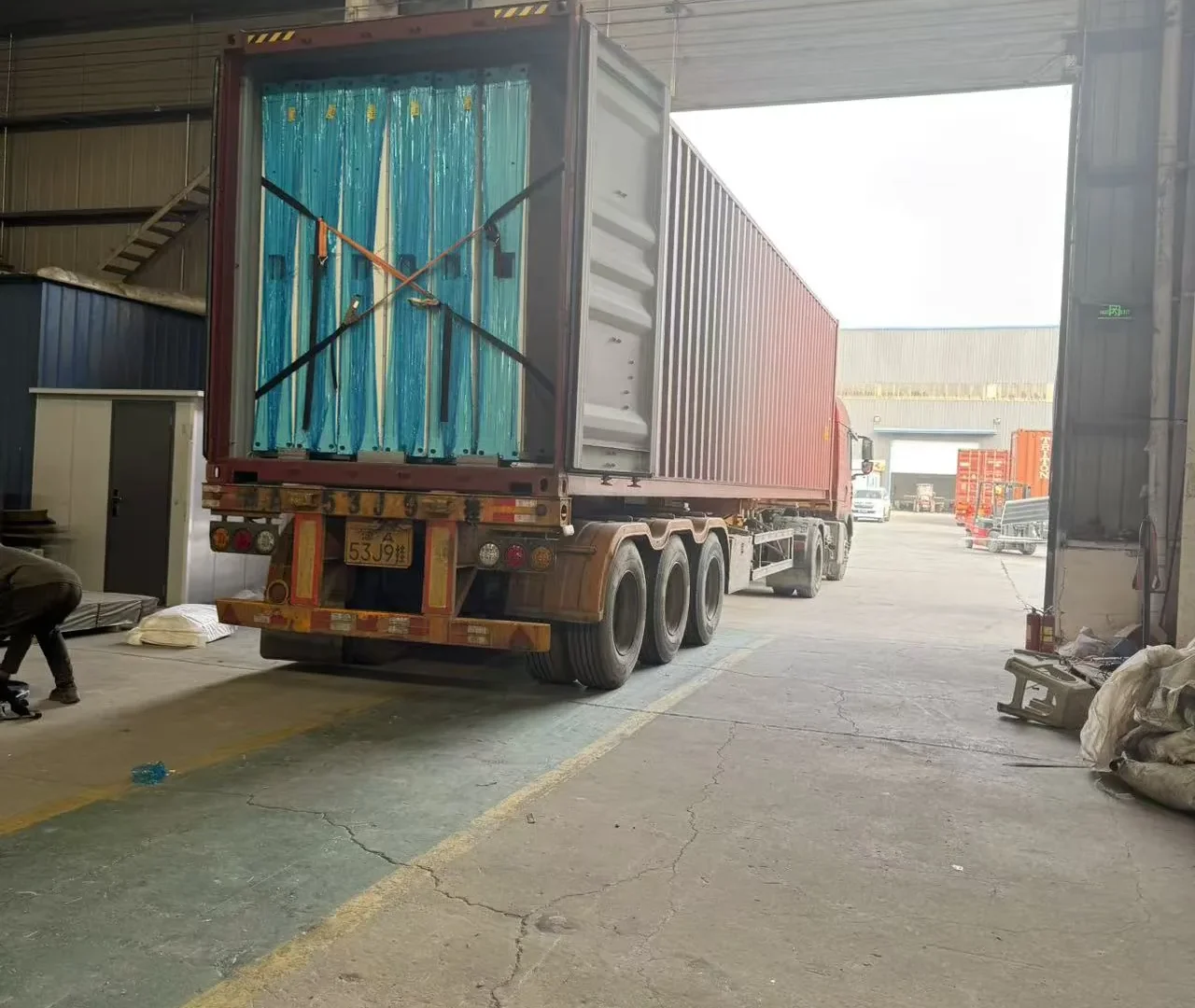
Ocean freight is the line item that quietly decides whether a modular housing program stacks up. Before dealers and camp operators compare wall panels or floor plans, they ask one question first: how many units travel in a single container? The answer, more than any other number, sets your landed cost per unit — and it is where folding container houses pull away from every other building system.
How Many Units Per 40HQ: The Numbers by Model
Every SunModu unit is engineered backwards from the container. Folded dimensions are not an afterthought of the design — they are the design. Our current loading quantities, taken directly from each model’s packing specification:
| Model | Folded pack (mm) | Loading quantity |
|---|---|---|
| Compact Mid-Fold Container House | 5800 × 2470 × 320 | 14 units / 40HQ |
| Rapid Z-Fold Container House | Z-fold flat pack | 10 units / 40HQ |
| F720 Compact Expandable | 5900 × 720 × 2480 | 6 units / 40HQ |
| 10ft Expandable | 2950 × 2150 × 2480 | 4 units / 40HQ |
| 20ft Expandable | 5900 × 2200 × 2480 | 2 units / 40HQ |
| 30ft Expandable | 9000 × 2200 × 2480 | 1 unit / 40HQ |
| 40ft Expandable | 11800 × 2200 × 2480 | 1 unit / 40ft flat rack |
The folding container houses sit at the top of this table for a reason. A mid-fold unit closes to a 320 mm profile — roughly the height of a stack of four kitchen chairs — so fourteen finished rooms slot into one 40HQ high-cube.
The Per-Unit Freight Math
The arithmetic is simple, which is exactly why it is powerful:
Freight cost per unit = (one container movement) ÷ (units loaded)
One ocean freight quotation — whatever your lane and season dictate — is spread across the units inside. Load two 20ft expandables and each unit carries half the container leg. Load fourteen mid-folds and each carries one fourteenth. Same vessel, same documentation, same port handling: the folding system divides the fixed cost of moving a box across the ocean by a factor of seven.
Two practical notes on the math:
- Folding programs are cube-limited, not weight-limited. Fourteen mid-fold units at 1,000 kg gross each total around 14 tonnes — nowhere near a 40HQ’s payload ceiling. The binding constraint is volume, which is why the folded profile is the number to watch.
- The ratio holds on the domestic leg too. A full container travels from port to site as one truck movement; fourteen units arrive in one delivery, not fourteen.
How a Folded Pack Survives the Sea
Loading density means nothing if units arrive damaged, so the packing sequence is specified per model: each unit is flat-packed in its folded state, wrapped in stretch film with foam edge protection and corner guards, then stacked and lashed inside the container by our packing team. The 30ft and 40ft expandables — which travel as single units on flat racks or open-top containers — add steel strapping to the same protective package.
Offloading at destination is planned before the container sails. Most models specify a forklift or crane of 3–5 ton capacity; the 30ft requires an 8-ton crane and the 40ft a 10-ton crane, per the packing tables. Your shipping and packing process page details the wrapping, lashing and handling requirements model by model.
What This Means for Volume Programs
For mining camps, workforce accommodation and emergency programs, the loading table is the business case. A 200-person camp built from mid-fold units moves in roughly fourteen containers; built from standard-width modules, the same program can double or triple the container count — and the freight, port fees and trucking that follow them. The folding systems deploy with a 4–5 person crew in 6–8 hours per unit using basic tools, so the site side keeps pace with the containers.
If you are planning a program, send us the headcount, the unit mix and the destination port. We will prepare a per-container loading plan and a freight estimate together with the quotation — warranty terms, MOQ and delivery schedule are all confirmed in quotation, so there are no surprises after the first container books.
FAQ
How many folding container houses fit in a 40HQ?
Fourteen units for the Compact Mid-Fold model (folded to 5800 × 2470 × 320 mm) and ten units for the Rapid Z-Fold model. Both figures come from the models’ packing specifications.
Is a folding house cheaper per unit than an expandable house?
On freight, usually yes — 14 or 10 units per container against 2 for a 20ft expandable. The trade-off is interior volume after deployment: a 20ft expandable opens to 38.2 m² of finished space. Which system wins depends on whether your program is headcount-driven or living-standard-driven.
What do you need from me to calculate freight cost per unit?
The unit mix, the destination port and your schedule. We reply with a loading plan and a freight estimate alongside the quotation; final freight is confirmed at booking, and MOQ and warranty terms are confirmed in quotation.
Plan your own load: the container load calculator works out containers, weight and handling from the same factory loading data.