
TL;DR: The Fast Answer for Cafe Founders
A shipping container coffee shop typically opens from a factory-fitted 10ft to 20ft unit at a baseline build cost of $25,000 to $80,000 before espresso equipment and site work. Factory fit-out moves most construction off your pad, shortens the path to opening day against site builds, and leaves you with a unit that relocates when the lease ends.
What Is a Shipping Container Coffee Shop?
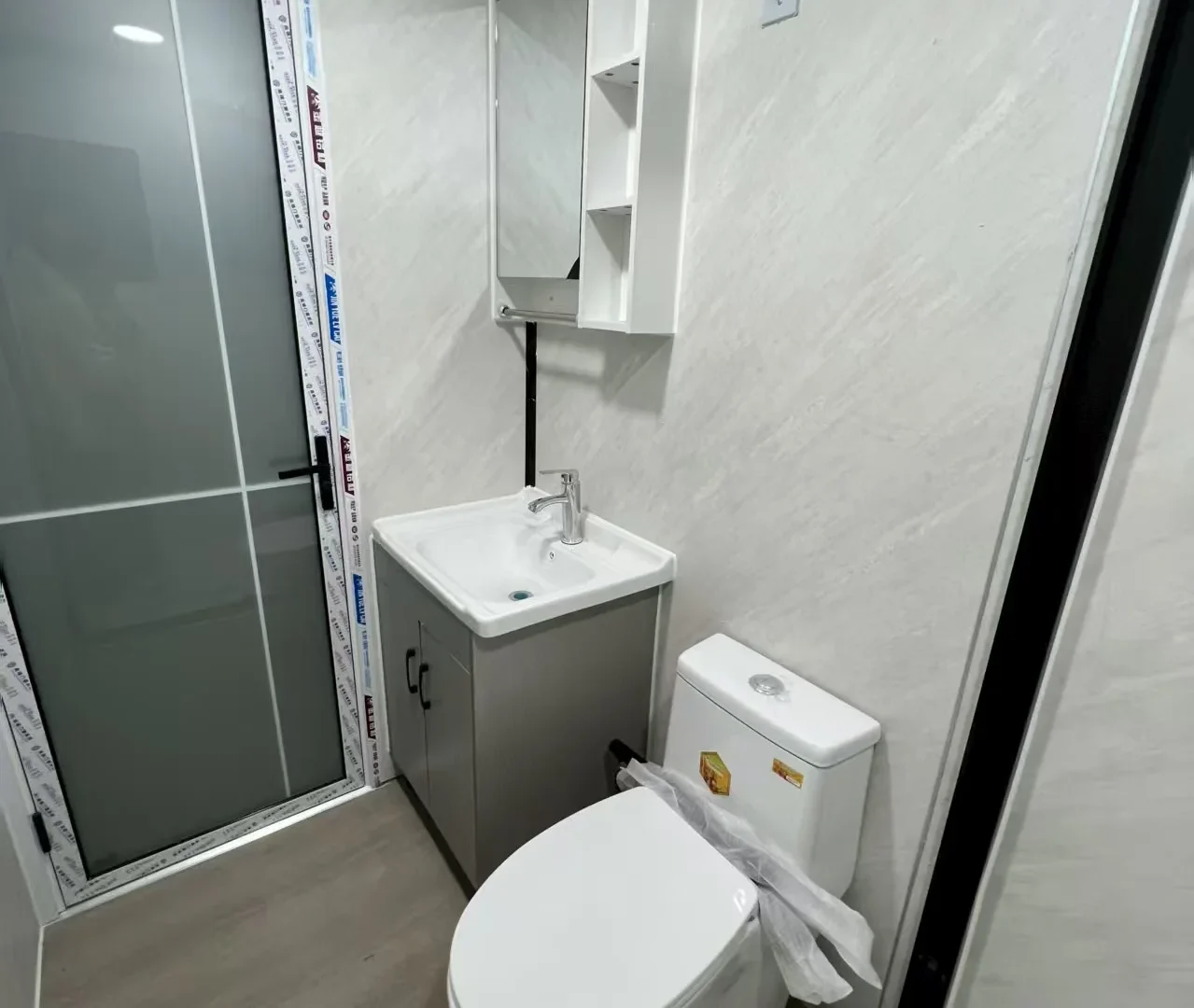
A shipping container coffee shop is a steel box converted into a working cafe before it leaves the factory: insulated and lined, wired and plumbed, fitted with counters, brew positions, and a serving window. Offsite builders finish 60 to 90 percent of each module inside a controlled plant, notes the Modular Building Institute, so site work shrinks to pads, utility tie-ins, and leveling. What arrives on the truck is a fitted unit waiting for connections.
Demand on the beverage side holds steady. About 66% of American adults drank coffee in the past day in the National Coffee Association’s fall 2026 tracking, and out-of-home coffee occasions reached 38% of past-day consumption, the highest share since January 2020. A compact cafe unit converts that street and campus traffic into a serving point without taking on a full brick-and-mortar lease.
The building method has scale behind it. US permanent modular construction reached $20.5 billion in 2025 and is projected to compound at 6.5% a year through 2030, according to the Modular Building Institute’s 2025 industry analysis, which also credits factory production with trimming project timelines by 20 to 50 percent against conventional site builds. SunModu runs its commercial space solutions on the same production logic, and custom interior fit-out is part of the factory program.
Layout and Services: Water, Power, and the Barista Flow
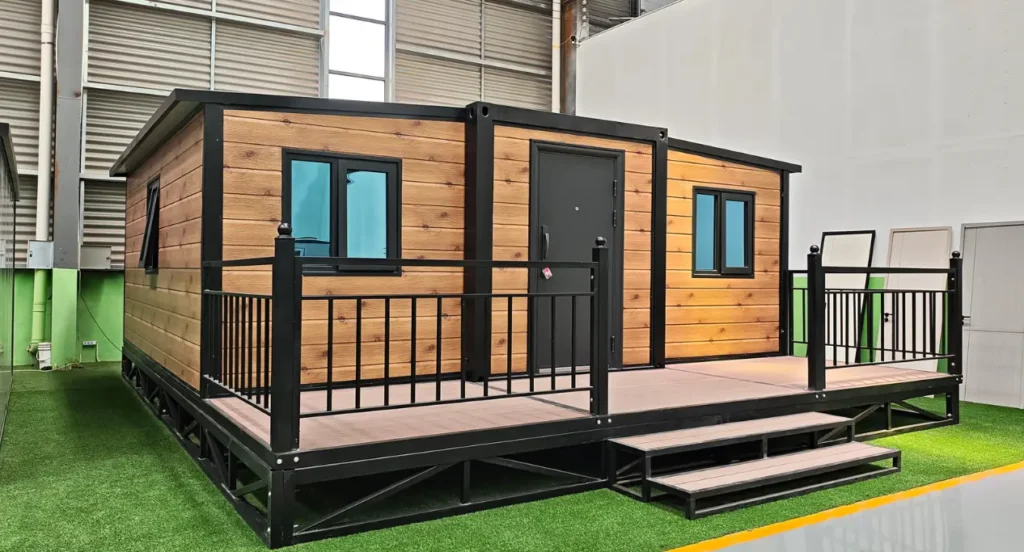
Plan the back of house before the front of house, because equipment positions decide where every service drop lands. The brew line needs water at pressure, a drain path, and circuits sized for machines that draw heavier current than a typical office appliance set. Milk refrigeration, a pastry case, and HVAC share the same panel, so the load calculation belongs at the start of the factory conversation.
The customer side has its own geometry. Orders, brewing, and handoff run in one direction so a queue stays out of the barista’s workspace, and the pickup window faces the traffic that feeds it. Storage closes the loop: dry goods shelving, under-counter refrigeration, and a dedicated milk fridge within reach of the brew line.
- Water: a potable inlet, pressurized lines to the brew position, a floor drain, and a waste tank where hookups are absent.
- Power: a service panel sized for espresso machines, grinders, refrigeration, and climate control together, with headroom for menu additions.
- Counter run: depth for the brew sequence so baristas work without side-stepping each other.
- Serving: a pickup window on the queue side and a roll-down shutter for off hours.
- Compliance: a handwash sink and surfaces that clean down quickly, the items a health inspector checks early.
Fix this layout on paper before fabrication starts. Factory fit-out prices changes on a drawing, while changes after fabrication price like rework.
How Much Does a Shipping Container Coffee Shop Cost?
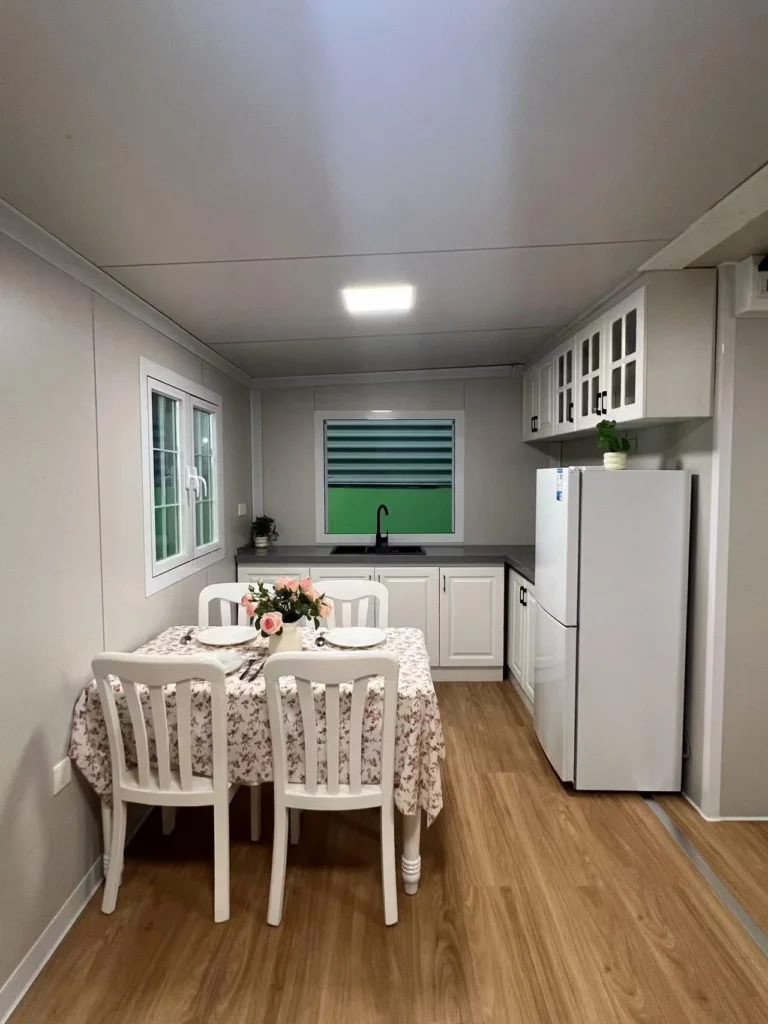
A shipping container coffee shop shares its cost anatomy with other container builds: US cost surveys collected by Bob Vila put a single-container project between $25,000 and $80,000, and multi-container builds between $80,000 and $250,000. A cafe program adds equipment and fitting on top of the shell budget, and those line items follow the menu, so suppliers quote them per specification.
Baseline ranges for the shared components look like this:
| Cost line | Typical US range | What moves the number |
|---|---|---|
| Insulated container shell | $2,200 to $18,000 | Size, insulation grade, new or used |
| One-container conversion project | $25,000 to $80,000 | Fit-out grade and glazing |
| Multi-container conversion project | $80,000 to $250,000 | Number of boxes and combining works |
| Electrical rough-in | $1,600 to $7,800 | Equipment load and circuit count |
| HVAC | $2,000 to $10,000 | Climate zone and glazing area |
| Foundation or pads | $3,000 to $19,350 | Ground conditions and frost depth |
| Permits | $500 to $2,000 | Jurisdiction and duration |
| Espresso equipment and refrigeration | Quote-based | Menu depth, new or used machines |
Treat the table as a starting frame. Small-business cost planning at the US Small Business Administration splits a startup budget into one-time charges and monthly running costs, and a cafe fits that split well: the build and the espresso package are one-time, while rent on the pad, utilities, and bean supply repeat. The same five cost drivers that move how much a container home costs apply here, with food-service fit-out added as a sixth.
Steel input prices move shell quotes too. The BLS producer price index for steel mill products stood at 381.162 in August 2026, after rising through the year, and suppliers tend to fold that movement into the quotes they issue afterward. A drawing-ready buyer therefore tends to lock tighter numbers than a browsing one.
10ft Kiosk, 20ft Full Kitchen, or a Two-Box Combo
Size follows the menu, and the menu follows the site. The three configurations below cover nearly every shipping container coffee shop brief, and each pairs a footprint with a service style.
Is a 10ft shipping container coffee shop enough for espresso-only service?
For a takeaway-led menu of espresso, filter, and cold brew, yes. A 10ft unit carries about 80 sq ft of footprint, enough for a two-group machine, grinders, an under-counter fridge, and a compact pastry case, with one or two staff working a single counter run. SunModu’s 10ft expandable container house sits at the compact end of that same factory line.
When does a 20ft shipping container coffee shop justify the extra footprint?
When the menu grows past drinks or the site needs dwell space. About 160 sq ft separates the brew line from a prep zone, leaves room for a bussing point, and supports a window ledge or small deck for customers who stay. It is the usual step once food enters the plan, and it maps to SunModu’s 20ft expandable container house for buyers who want the factory-direct route.
What does a two-unit shipping container coffee shop add?
Separation. One box runs the front of house while the second carries prep, storage, and dishwashing, and the space between them can take a covered seating deck. The combo doubles freight and pad work, and it multiplies the permit surfaces, so it earns its place only where volume justifies both.
| Factor | 10ft kiosk | 20ft full kitchen | Two-box combo |
|---|---|---|---|
| Footprint | About 80 sq ft | About 160 sq ft | 320 sq ft and up |
| Menu depth | Espresso, filter, cold brew, pastry case | Full espresso bar plus food prep | Brewing front, prep and storage rear |
| Staffing | 1 to 2 baristas | 2 to 4 | 3 to 6 |
| Seating | Takeaway led | Window ledge or small deck | Covered seating between boxes |
| Fits | Parking lots, campus paths, event pads | Pad sites and drive-thru lanes | High-volume corridors and flagships |
Where the Format Pays: Drive-Thru Lanes, Campuses, and Seasonal Sites
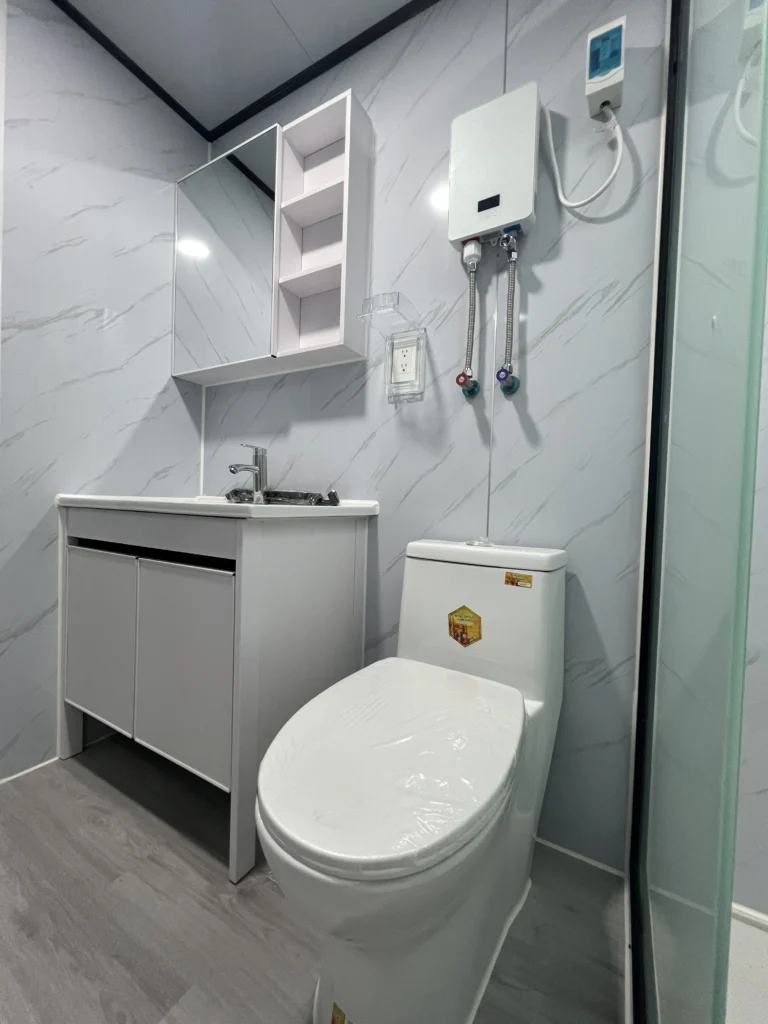
A shipping container coffee shop set beside a drive-thru lane needs one clear vehicle path, a stacking area sized to the site’s traffic, and a pickup window positioned for vehicle-side service. The factory can place glazing, doors, and counters to match the lane side before the box ships. Clearance and turning-radius surveys come before the order.
Campuses and business parks are the second home for the format. A cafe box lands on a slab beside foot traffic, runs on a utility pedestal, and leaves the pad as clean as it found it when the operator redeploys. The relocation habit is established elsewhere in the industry, where relocatable classrooms, site offices, and pop-up retail units move between sites as programs start and finish. It is the same logic that puts a factory-direct shipping container office on a jobsite, applied to a menu instead of a desk.
Seasonal sites round out the set: beach strips, winter markets, festival grounds, and tourist roads that carry traffic for part of the year. A seasonal operator pays for the unit once and serves several locations across the calendar, which is the arithmetic that makes the format work where a conventional build struggles to pay back.
What Goes Wrong Before Opening Day?
A short list of checkable slips causes most shipping container coffee shop projects to stumble, and every one of them closes before money moves.
- Ordering before the power question settles, so the unit arrives and then waits for a service upgrade the site cannot host.
- Skipping the health-department conversation early: retail food service falls under codes that state, local, tribal, and federal agencies adopt from the FDA Food Code, and agencies update their adoptions on their own schedules.
- Assuming one approval covers everything, when zoning, building, health, and signage usually sit in different offices.
- Buying a corroded used shell to save on the box, then paying the difference back in remediation and delays.
- Ignoring the move: every relocation needs a truck, a tilt-bed or crane, utilities disconnected and reconnected, and a fresh check of local rules.
- Budgeting the shell and forgetting the running costs, which is why the one-time-versus-monthly split from startup planning matters here too.
None of these are exotic failures. Each one is a phone call or a drawing note away from being closed, and the factory conversation is the natural place to close them.
Frequently Asked Questions
How much does a shipping container coffee shop cost?
Most single-unit projects land between $25,000 and $80,000 for the converted container before food-service equipment, based on US container-build cost surveys. A cafe fit-out adds espresso machines, water filtration, refrigeration, and menu-driven prep space, and multi-unit or full-kitchen builds climb toward $80,000 to $250,000. Site work, permits, and utility upgrades sit outside those figures and vary by location.
Do you need permits for a shipping container coffee shop?
In most US jurisdictions, yes: expect a zoning review, a building or occupancy permit, and a health-department check for food service. Retail food safety rules trace back to the FDA Food Code, a model code that local, state, tribal, and federal agencies adopt for restaurants and retail food operations. Because agencies update their adoptions on their own schedules, confirm the current requirements with the local office before the unit ships.
What size container works for a coffee shop?
An espresso-only, takeaway-led menu fits a 10ft unit, a full bar with prep space fits a 20ft box, and high-volume sites split across two units. Fix the menu first, then size the counter run, the equipment, and the storage around it, because changing the footprint after fabrication costs more than ordering the right size from the start.
Can a shipping container coffee shop be moved?
Yes, and relocation is part of the format’s logic. Relocatable buildings already work this way across construction, education, and pop-up retail, with fleet owners shifting units between sites as demand moves. A relocation needs a truck, a tilt-bed or crane, utilities disconnected and reconnected, and a fresh permit check at the new address, and a factory-fitted container cafe is built to repeat that cycle across sites.
References
- https://www.modular.org/industry-analysis/
- https://www.modular.org/markets-served/
- https://fred.stlouisfed.org/series/WPU1017
- https://www.bobvila.com/articles/container-home-cost/
- https://www.sba.gov/business-guide/plan-your-business/calculate-your-startup-costs
- https://www.fda.gov/food/retail-food-protection/fda-food-code
- https://www.ncausa.org/newsroom