
TL;DR: Prefab house electrical standards are market-specific and locked at the factory: SunModu units ship with CE-certified 12 kW systems, 63 A RCD + MCB protection and copper wiring, with EU, US, UK or AU socket and voltage packages fitted for the destination country. Below we compare the AU, US and EU frameworks and the certificates to request.
Ask a prefab factory which electrical standard it builds to and the honest answer is whichever one you specify. Prefab house electrical standards are market-specific hardware: a socket outlet, a breaker and a cable sheath are each dimensioned, colored and certified differently by market, and changing them after delivery means opening finished walls. That is why the question belongs at quotation stage, alongside layout and insulation. This article walks through how the electrical package is configured in our factory, what the base specification covers, and which documents matter for Australia, the US and Europe.
What Do Prefab House Electrical Standards Cover Before Shipping?
In the factory, the electrical package is a configuration decision made at contract stage. The contract names the destination country, and that field drives the socket format, the voltage system, the switch hardware and the distribution box layout fitted to the unit. EU, US, UK and AU wiring packages sit in the optional configuration list, and a project-specific standard is configured where a jurisdiction demands one. This is why the first technical question we put to ADU developers and camp operators is simply destination: a wholesale granny flat program supplying Queensland needs a different distribution box than a workforce camp in the same state, and both differ from a US backyard suite.
Assembly typically fits sockets, switches and internal wiring before the wall and ceiling linings close in, with the distribution box and its protections installed as standard equipment. Because the wiring package is complete on arrival, a finished unit typically needs only the main supply connection and a licensed sign-off on site. Specification locks at CAD stage, before the chassis is cut: changing an electrical package after production means opening finished walls.
Which wiring details change between packages?
Three families of details move when the destination changes. Conductors and color codes: the same copper core arrives in different sheath colors and phase markings, so a site electrician reads the installation the way their training expects. Accessories follow: socket outlets, switches and connection units change shape, rating and mounting to match local habits. Protection settings, breaker ratings and RCD sensitivity are arranged for the supply system named in the contract.
None of it touches the chassis or the layout. What changes is what your electrician sees when the panel door opens, and that is exactly what the certificate pack should make legible before the order.
What does the base electrical package include?
Across the expandable range (20ft, 30ft, 40ft) and both folding models, the factory electrical specification is CE conformity, 12 kW maximum power, 63 A RCD + MCB protection, copper wiring. The 10ft and F720 compact models carry the same CE conformity at 12 kW with copper wiring. The RCD trips on leakage current, the failure mode behind most shocks in wet areas, while the MCBs protect individual circuits from overload. The 12 kW figure is the designed load ceiling your electrician sizes the site supply against.
That ceiling holds more headroom than it may appear to. The US Energy Information Administration puts average US household consumption at 899 kWh per month (2022), which works out to roughly 1.2 kW drawn continuously, so a 12 kW connection accommodates simultaneous lighting, heating, cooking and hot water loads (EIA).
How Do Prefab House Electrical Standards Differ Across AU, US and EU?
The three markets organize the same physics differently: who writes the installation rules, which document governs the hardware and who signs off the connection. The comparison below is the version we keep pinned above the specification desk.
| Question | Australia | United States | Europe |
|---|---|---|---|
| Which document rules the installation? | AS/NZS 3000, the Wiring Rules (Standards Australia) | NFPA 70, the National Electrical Code (NFPA) | National wiring codes, typically following the IEC 60364 framework |
| What does that document cover? | Technical rules for designing, constructing and verifying installations, in two parts | The benchmark for safe electrical design, installation and inspection | Each country publishes its own adaptation and amendments |
| Which supply is the package configured for? | 230 V networks, AU socket and color conventions | 120/240 V networks, US socket and color conventions | 230 V networks, EU socket and color conventions |
| Which mark covers the product? | SAA component approvals, certificate by certificate | Component documentation per specified part | CE marking under the EU Construction Products Regulation (Regulation (EU) 2024/3110) |
| Who signs off the connection? | Licensed electrician under state rules | Licensed electrician under the authority having jurisdiction | Licensed electrician under national rules |
The table explains why destination drives configuration: the same chassis lands on three different supply systems with three different sign-off chains. For a buyer, the practical meaning is simple: prefab house electrical standards travel with the order documents, and the market paperwork follows the destination you nominate. The next two sections walk through that paperwork market by market.
Which Certificates Should an Australian Project Ask For?
For Australian projects, the documentation that matters is component certification, and we maintain it certificate by certificate. The components fitted to AU-specification units, all displayed on our compliance and certifications page, break down as follows:
| Component | Standard | Evidence |
|---|---|---|
| Switched socket outlets | AS/NZS 3112 | SAA Approvals certificate |
| Wall switches | AS 3133 | SAA Approvals certificate |
| Circuit breakers | AS/NZS 60898.1 | SAA Approvals certificate |
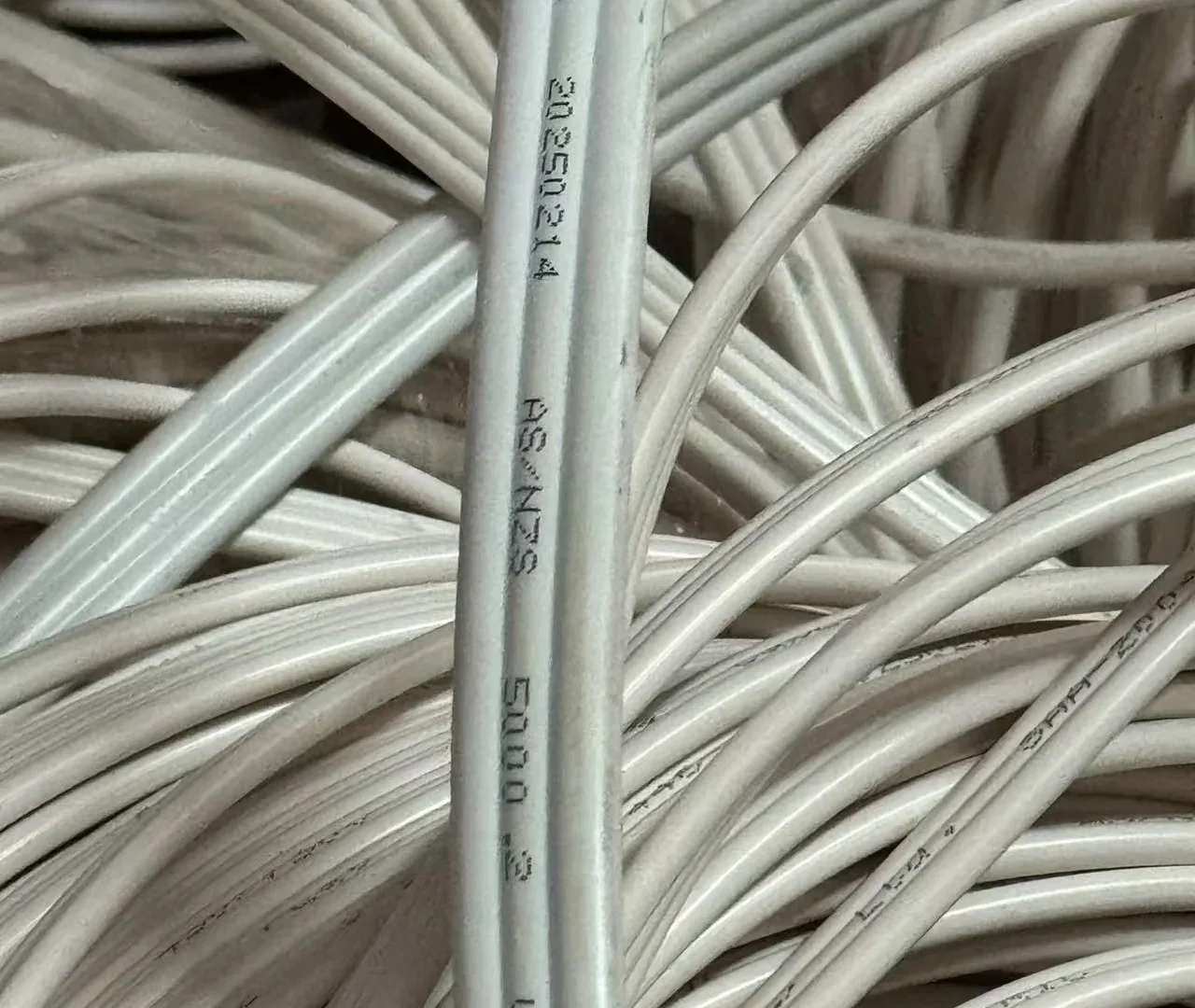
| Building wiring cable | AS/NZS 5000.2 | SAA approval marking on the cable sheath |
| Wall and ceiling fans | AS/NZS 60335.2.80 | SAA Approvals certificate |
| Wet-area basin, tapware and PVC-U DWV fittings | AS/NZS 3718, AS/NZS 1260 | WaterMark certification |
| Wet-area glazing | AS/NZS 2208 | Toughened safety glass certificate |
On the plumbing side, the National Construction Code requires any plumbing or drainage product listed on the WaterMark Schedule of Products to be WaterMark certified, with installation by a licensed plumbing practitioner (WaterMark scheme). The wet-area package in the table is specified to arrive inside that requirement.
State the scope plainly, as the compliance page does: these are component-level certificates held by the part suppliers, described as SAA-approved electrical components and WaterMark-listed components, and they are not a whole-of-building approval. Your local certifier and licensed electrician remain responsible for the installation sign-off under AS/NZS 3000 and the servicing rules in your state. What the component pack removes is sourcing risk: every critical part arrives with traceable, in-date evidence.
What Documentation Covers EU and North American Deliveries?
For EU-bound units, the electrical chain is supported by CE conformity documentation at component level: instant electric water heaters tested to EN 60335-1 and EN 60335-2-35 (LVD + EMC), and wire and cable to EN 50525-2-31 (LVD). The unit-level package carries CE conformity as stated in the specification tables. The regulation behind that marking, cited in the table above, expects a declaration of conformity to be drawn up before a product is placed on the market.
For North American projects, we configure the US wiring package: sockets, breakers and distribution hardware arranged to North American layouts, with the component documentation available for the specified parts. This is the current shape of prefab house electrical standards in North America: a factory-configured wiring package plus project-assembled certification paperwork. Expectations in the US and Canada are strict and project-specific, so raise them at specification stage.
Name the authority having jurisdiction and we will confirm in writing what documentation accompanies the shipment. We would rather scope this honestly before the order than discover it at the port.
What Should You Request with Your Quotation?
Whatever the market, ask for the compliance pack alongside pricing:
- The electrical specification page for each model in your mix (package, 12 kW ceiling, RCD + MCB configuration)
- Component certificates applicable to your destination, with validity dates
- Third-party test reports where relevant, for example the fiber-cement floor board report stating no asbestos detected, which Australian importers are frequently asked for
- Written confirmation of the wiring package locked at CAD stage
Warranty terms and MOQ are confirmed in quotation. If any certificate, standard or connection detail is missing from the pack, flag it before production. The cheapest time to change an electrical system is while it is still a drawing.
Frequently Asked Questions
Do the houses ship with RCD protection as standard?
Yes. The factory specification across the 20ft/30ft/40ft expandables and both folding models is a 63 A RCD + MCB-protected distribution box on copper wiring, rated to 12 kW maximum power.
Can one order mix different prefab house electrical standards?
Yes. The wiring package is a per-unit configuration selection (EU, US, UK, AU or project-specific), so prefab house electrical standards can differ unit by unit within one order; mixed orders for different destinations are planned per project and confirmed in quotation.
Who connects the unit to the mains on site?
A licensed electrician in the destination market completes the connection and sign-off under the local wiring rules. Units arrive pre-wired to the agreed package, so the site scope is typically the main supply connection, inspection and certification.
What happens if the destination market changes after ordering?
The wiring package locks at CAD stage, before production starts, which is why the destination country should be confirmed in writing at quotation. A change after production means opening finished walls, so the economical window for a market switch closes once fabrication begins.
Are the units certified for connection to the Australian grid?
Units use SAA-approved electrical components and arrive with the component certificate pack; final connection and sign-off are completed by a licensed electrician under the applicable state rules. There is no whole-of-unit approval document.