
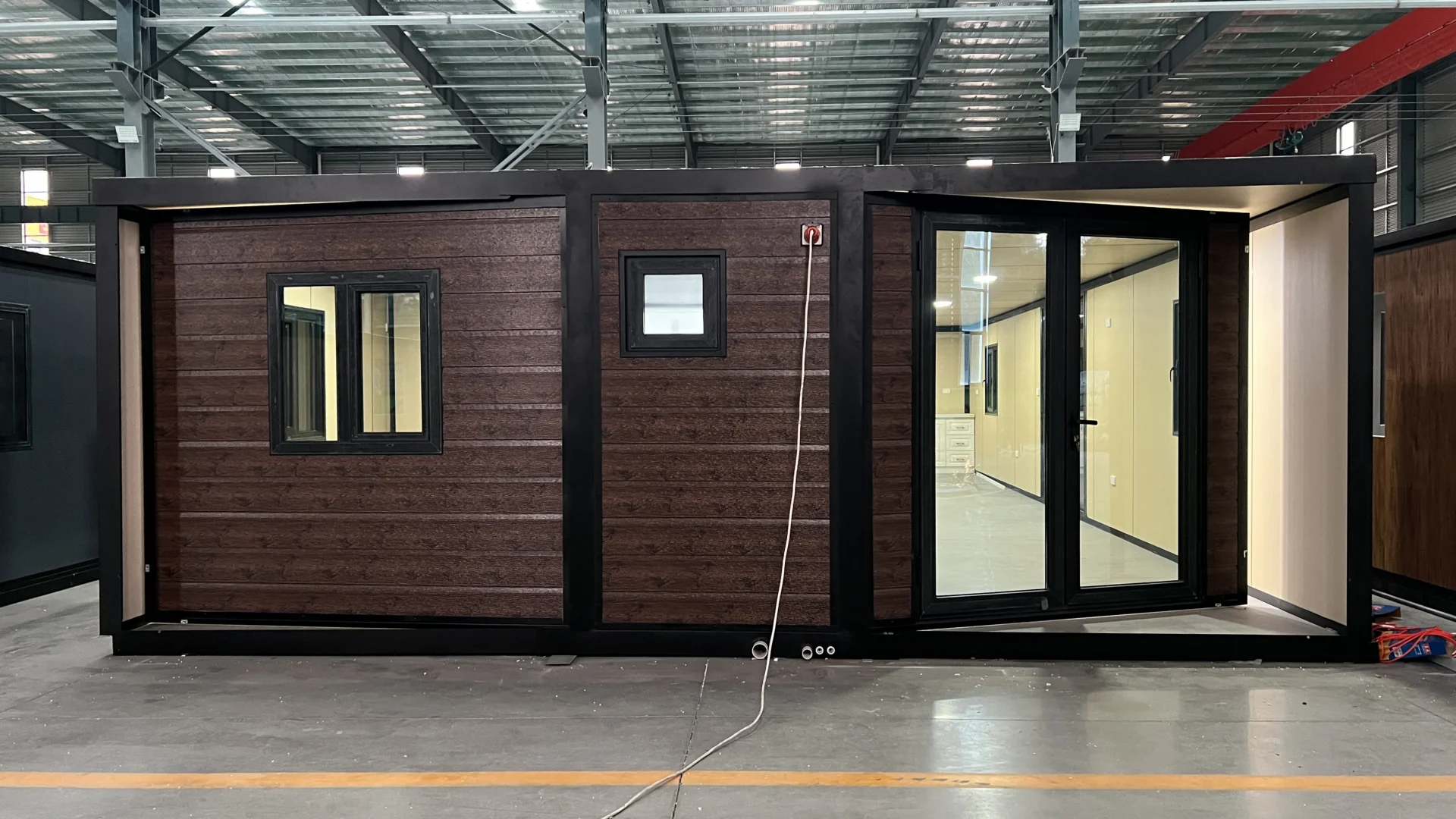
TL;DR: Glamping cabin cost breaks into four buckets: cabin mix, ocean freight, installation days and running costs. SunModu factory loading data shows six F720 cabins per 40HQ versus two 20ft expandables, which divides one container quote six ways or two. Add 4 to 12 hour installations and a 148-finish facade system, and the unit economics become predictable.
Every glamping business case comes down to one number that spreadsheets love and suppliers avoid: what does a cabin actually cost, all in, once it sits on your site receiving guests? No honest supplier quotes that blind, because glamping cabin cost moves with your freight lane, your ground conditions and your specification. What we can do is split the number into its four real components and show the factory data behind each one.
The demand side is measurable too. KOA’s 2026 Camping and Outdoor Hospitality Report counts over 52 million North American households camping in 2025 and a $66 billion economic footprint (KOA report), which is the pool your cabins compete for. The four components below decide how much of it each unit captures.
How Does Glamping Cabin Cost Break Down by Guest Type?
Capital cost starts with matching the model to the guest, because paying for floor area you cannot resell is the fastest way to sink unit economics. The composition we recommend most often:
| Guest type | Recommended models | Why |
|---|---|---|
| Couples / twin-share | F720 Compact, 20ft Expandable | Fast to open, complete one-room experience |
| Families | 30ft / 40ft Expandable | Multi-room, separate living zone |
| Camp infrastructure | Bathroom Pod, Kitchen Pod | Centralized wet areas and catering |
A 29.5 m² F720 cabin and a 74.8 m² 40ft villa serve different rates and different seasons. Most resorts end up with a mix, weighted toward the compact end and topped with a few flagship family units. Interior fit-out (guest-ready bathrooms and kitchen provisions factory-installed) means each cabin opens as a bookable room, and the facade decisions that lift the rate side return in the finishes section below.
How Many Cabins Share One Container? The Freight Amortization Math
Ocean freight is quoted per container movement, and public indices show how much that single number moves: the Drewry World Container Index composite was $4,389 per 40ft in early November 2026, about 124 percent above its level a year earlier (Drewry WCI). Whatever your lane quotes in the week you book, the factory question stays the same: how many cabins share the box? The official packing baselines, taken from each model’s factory packing specification, are:
| Model | Units per 40HQ |
|---|---|
| Compact Mid-Fold (folding) | 14 |
| Rapid Z-Fold (folding) | 10 |
| F720 Compact Expandable | 6 |
| 10ft Expandable | 4 |
| 20ft Expandable | 2 |
| 30ft Expandable | 1 |
| 40ft Expandable | 1 (flat rack) |
From the factory side, the loading economics are one formula: freight cost per unit equals one container movement divided by the units loaded. Six F720 cabins folded to a 720 mm profile carry one sixth of the container leg each, while two 20ft expandables shipping as finished boxes carry half each, same vessel, same documentation, same port handling, but a different per-cabin number. This is why the freight component of glamping cabin cost behaves so differently across a mixed fleet, and why remote and island resorts lean on the compact models when the budget has to survive a long ocean leg.
Two practical notes from the packing floor. Folding and compact programs fill the container by volume before weight: fourteen 1,000 kg mid-folds total around 14 tonnes, well under a 40HQ payload ceiling, so the folded profile is the number to watch. The ratio holds on the domestic leg too, where a full container is one truck delivery to site, and phased deliveries aligned to your opening schedule avoid paying to store cabins while later site works finish. The full loading table lives on our container house loading capacity page, and the wider program context is on the glamping and eco-resort solutions page.
How Fast Can a Crew Turn a Cabin Around On Site?
Site cost is a function of time on site, and prefab cabins compress it:
- Crew: 3 to 4 persons for a 10ft, 4 to 5 for the F720 and 20ft, scaling to 6 to 8 for a 40ft
- Duration: 4 to 6 hours for a 10ft and 10 to 12 hours for a 40ft per unit; the F720 and 20ft sit at 6 to 8 hours
- Equipment: a forklift or crane of 3 to 5 ton capacity for most models, with no large crane mobilization on compact cabins
- Foundations: units install on simple foundations instead of continuous footings, which is often the difference that makes a sloped or sensitive site buildable
Compare that calendar to conventional cabin construction measured in months. The real saving is rarely the daily rate of the crew; it is the seasons of revenue the resort does not lose, and installation is where glamping cabin cost hides a schedule advantage that spreadsheets tend to miss.
What Does a Cabin Consume Once Guests Check In?
Running costs are the quietest component of glamping cabin cost, and the specification choices behind them are locked before production:
- Insulation: 75 mm EPS sandwich panels as standard, with rock wool or PU upgrades; the difference between heating a cabin and heating the outdoors in shoulder seasons
- Energy: solar panels, inverter and battery storage as optional packages; for off-grid sites they compete with generator fuel and grid extensions, and the 12 kW electrical ceiling sizes the energy system predictably
- Climate control: air conditioning and ventilation packages configured per climate
- Durability: galvanized steel frames and insulated roof systems standard across the range, wind ratings from Grade 10 (240 km/h) up to Grade 12 (320 km/h) on the 40ft, relevant to insurance as much as to uptime
The off-grid comparison has a hard number on the grid side: the US Department of Energy puts running a power line to a remote site at $15,000 to more than $50,000 per mile depending on terrain (DOE small wind guidebook). Solar-plus-storage packages compete against exactly that line item. The same guidebook benchmarks a typical US home at around 10,649 kWh per year, a reference point your energy designer scales down from, since a guest cabin’s loads typically sit well below a full-time household’s.
Which Finish System Turns the Same Chassis into a Brand Asset?
The rate side of the ledger is decided by perception as much as by floor area, and the facade is what guests photograph. The SunModu finish system spans 148 colors: 38 UV board colors for interiors and 110 steel wall panel colors for exteriors, all browsable in the finish swatch tool. Two resorts can order the same model and open with visibly different properties, one in a muted palette that blends into bushland, another in saturated brand colors guests recognize from the website. Facade and finish choices are fixed at specification stage, which makes them the least expensive lever in the whole glamping cabin cost ledger relative to how long they stay visible.
What Does Glamping Cabin Cost Recovery Look Like?
We do not publish revenue figures, because occupancy and rate belong to your market, your season and your brand. The framework operators use is compact: annual cabin revenue equals nightly rate times occupancy times operating nights, and cabin-level profit subtracts an allocated share of unit cost, freight, site works, energy and maintenance. The levers a factory actually influences are on the cost side, via loading density and installation speed, and on the rate side, via facade, layout and finish decisions that support premium positioning.
On the capital recovery side, tax treatment recognizes the building over time. IRS Publication 527 sets straight-line depreciation for residential rental property over 27.5 years (IRS Pub 527), the recovery window a US operator’s accountant will map the cabin structure into. The decision should survive a spreadsheet: test your ADR assumptions against the model mix before committing to a phase.
Can You Expand a Glamping Resort Without Closing It?
One structural advantage of the flat-pack resort is that expansion does not require shutdown. Cabins arrive as finished units and open on their own pads, so a resort can add six cabins before a high season without closing the existing ones. Operators typically start with a compact phase, read the occupancy data, then scale the mix, and the resort project program supports that pattern from cabin mix proposal to phased delivery scheduling. MOQ, lead times and warranty terms are confirmed in quotation per phase.
Frequently Asked Questions
How many glamping cabins fit in a shipping container?
Per the factory packing baselines: six F720 compact cabins, four 10ft expandables or two 20ft expandables per 40HQ, with the folding models at ten to fourteen units. The compact models exist to cut the freight share of glamping cabin cost for remote sites.
Do I need a crane to install resort cabins?
Usually not. Most models offload with a forklift or crane of 3 to 5 ton capacity, and the 40ft villa is the exception requiring a 10-ton crane. Site works are limited to simple foundations.
What drives glamping cabin cost the most between two otherwise similar resorts?
The mix and the freight leg. Model choice sets the capital base, loading density divides the container quote, installation hours set the site bill, and insulation and energy packages set the running costs. Finishes then decide how much rate the unit supports.
Can cabins run off-grid?
Yes. Solar panels, inverter and battery storage are factory options, and the 12 kW-rated electrical system gives your energy designer a defined load ceiling to size against.