
Mining camp accommodation has moved back up the project agenda as Australian mining employment climbs and new deposits push development into remote ground. This article compares the three modular unit families now used for mine site accommodation, sums up what regulators expect of a remote village, and sets out the cost lines that decide a camp budget. The aim is practical: pick a format, plan a layout, and see where the money goes before shortlisting suppliers.
TL;DR
- Three unit families cover mining camp accommodation: expandable rooms for space and comfort, folding units for the highest transport density, and bathroom or kitchen pods for wet areas built off site.
- Compliance is audited against published guides. In Western Australia, village audits cover occupational health, infrastructure, electrical, and mechanical systems, and state health law governs sanitation. Requirements vary by state.
- A mining camp accommodation budget splits into seven lines: units, freight, lifting, site works, utilities, catering and operations, and compliance. Freight density and site works swing the total the most.
- Freight is where modular formats earn their keep. One 40ft container carries 14 folding house units, and a crew of 4-5 can place and open each one.
Why Mine Camps Are Back in Focus
Mining employment in Australia sits at 241,000, up 2.1% on the previous year, according to the ABS Australian Industry statistics. Growth of that kind concentrates in operations run far from established towns, where a project brings its own village with it. That puts mining camp accommodation on the same critical path as plant, power, and roads.
The workforce side is organised too. AREEA, the resources and energy employer association, represents employers across the sector, and rosters on remote sites depend on the standard of the camp behind the fence. FIFO accommodation that falls short on comfort or services often shows up in fatigue and staff turnover, which is why village quality now enters project planning early.
Employment growth also drives camp upgrades. Established operations add wings as crews expand, and older villages get refits to line up with the audit guides now in circulation. Both flows produce the same purchase list: rooms, wet modules, and kitchen capacity that has to travel a long way from a factory gate.
What Regulators Expect of Mining Camp Accommodation
Camps are regulated at state level, and the practical entry point is audit paperwork. WorkSafe WA mining village audit guides set out a structured audit in four sets: occupational health and safety, infrastructure, electrical, and mechanical. Operators work through the templates before an inspection date arrives, which is how experienced managers de-risk a mining camp accommodation program.
Health regulation sits with a separate agency. WA Health guidance for mine sites and construction villages sets out how mine sites, exploration camps, and construction villages are handled under state health legislation, with matters such as sanitation and water supply managed under that regime. Requirements vary by state, so the compliance line in a budget should carry room for local checks, approvals, and documentation.
For buyers sourcing units from overseas, the working rule is component level. Switchgear, plumbing fixtures, and structural materials each follow their own certification path, and the assembled village is then assessed on site under the state regime. That ordering keeps factory fit-out and local compliance in their own lanes.
Documentation starts before containers ship. Camp managers typically collate the audit guides, unit drawings, and component certificates into one pack, and buyers who ask suppliers for that pack early avoid rework later. A supplier familiar with remote projects can usually provide drawings and component certification lists on request.
Unit Options for Mine Site Accommodation
Most remote camps now start life as factory-built modules. Three formats cover most mining camp accommodation programs, and SunModu supplies all three through its workforce and mining camp solutions range. The right mix depends on headcount, distance from port, and how often the village will move.
| Unit family | Install speed | Transport density | Comfort | Relocation |
|---|---|---|---|---|
| Expandable rooms | Opens in place; a small crew with light lifting gear handles it | Ships folded at reduced width; moderate | Widest internal floor area once open | Folds back down for the next site |
| Folding units | Fast unfolding cycles once services are connected | Highest; multiple units per container | Compact rooms suited to sleeping and rest | Unfolds, relocates, and refolds |
| Bathroom and kitchen pods | Set on footings, then connect to services | Small fixed footprint per module | Wet areas built and tested off site | Reconnects where services allow |
Formats also mix. A common pattern pairs folding sleep rooms with pod wet areas and an expandable unit or two for offices and common space, which balances freight density against liveability. Treat the table as a starting point for that conversation.
Where Mobile Mining Camps and Dongas Fit
The donga remains the reference point on Australian sites, and mining camp dongas typically travel as finished boxes, one or two per truck. Flat-pack and folding formats approach the same problem from the freight side: units fold flat and stack many deep in a single container, which is the logic behind SunModu’s folding container houses. For mobile mining camps that shift with the pit or move between tenements, that density compounds across every room in the village.
The Seven Lines in a Camp Budget
No two camps price alike, but the cost lines repeat across mining camp accommodation projects. Reading a quote line by line shows where the money sits and where a supplier has trimmed. The table sets out each line and the factors that move it.
| Cost line | What drives it |
|---|---|
| Units | Format choice, fit-out level, order quantity |
| Freight | Transport density of the format, distance from port, road access |
| Lifting | Crane or telehandler availability, unit weights, pad reach |
| Site works | Ground conditions, footings, pad levels, drainage |
| Utilities | Power source, water treatment, sewage or tank systems |
| Catering and operations | Kitchen capacity, staffing, consumables, camp management |
| Compliance | State audit requirements, component certifications, inspection time |
Schedule belongs in the cost picture too. The Modular Building Institute reports that modular construction cuts project timelines by 30-50%, and camps follow the same pattern: factory fit-out proceeds while site works are under way. Fewer idle days for the main crew and an earlier start to production are where that saving turns into money.
Two habits keep camp budgets honest. Quoting on a landed basis, with freight, lifting, and site works inside the number, gives a fairer comparison than factory prices alone. The other is holding a contingency for remote-site unknowns, because access roads, weather windows, and crane availability move on short notice.
Planning a Multi-Unit Layout
Workable villages are zoned. Living rows sit in their own zone, wet modules cluster where plumbing runs stay short, and the kitchen and mess sit apart from sleeping areas with service traffic kept to the edges. Zoning keeps daily movement short and trims the cost of service connections at the same time.
Common space earns its footprint. A recreation room, a laundry, and quiet corners for rest make a long roster livable, and crews tend to notice the difference within weeks. Wet module placement matters here as well, since short plumbing runs cost less to build and to maintain.
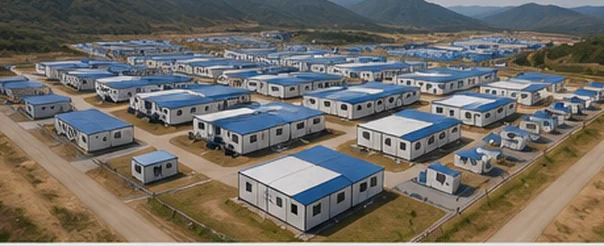
Room count and pod count drive the freight booking, so the layout drawing usually comes before the container order. Teams running multi-unit camp programs plan deliveries in staged batches so capacity grows with the roster. For mining camp accommodation at any scale, that staging keeps the village and the workforce in step.
Getting Units to Remote Sites
Flat-pack and folding formats pay for themselves on the freight leg. Units travel nested and strapped inside standard containers, which holds the volume charge down and protects fit-out in transit. The loading sequence is a discipline of its own, and our walkthrough of how we load 14 folding houses into one container shows it step by step.
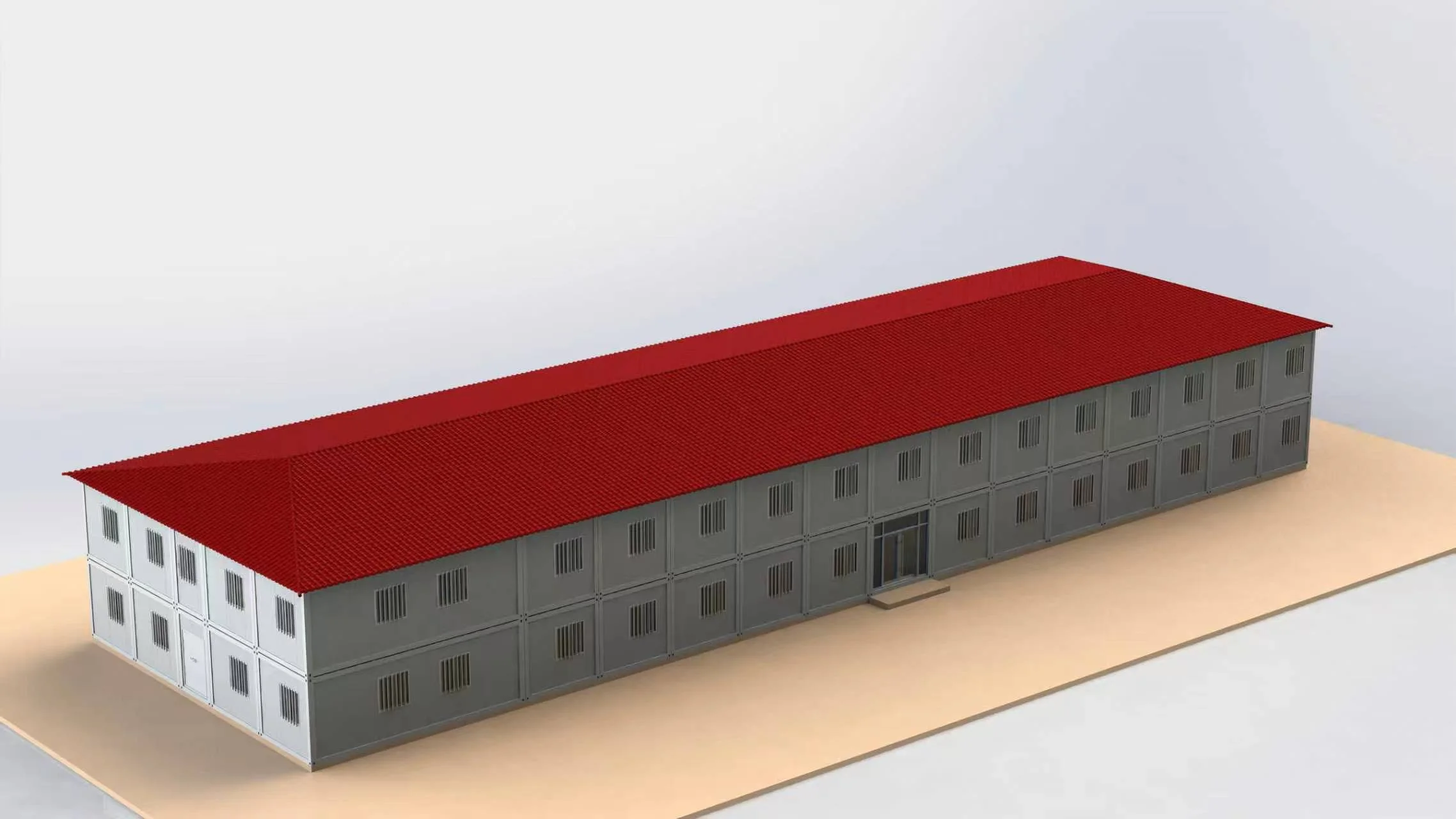
Past the port, the pattern is road transport to site, a lift with a mobile crane or telehandler, and connection to power and water. A crew of 4-5 places and opens each unit, which counts where local labour is thin and mobilisation is expensive. Mining camp accommodation planned around this sequence grows in batches instead of waiting on a single commissioning date.
Weather and road access set the rhythm of the last leg. Wet-season closures and long unsealed sections argue for consolidating deliveries into as few trips as the site can absorb. Flat-pack density helps here too, because fewer containers mean fewer runs down the same road.
FAQ
How many rooms can a camp ship in one container?
It depends on the format. Folding units pack the deepest: our documented loading sequence fits 14 folding houses into one 40ft container. Expandable rooms travel at lower density because of their folded width, and wet pods ship as compact boxes with plumbing protected for the trip. As a rough planning split, folding formats carry the density, expandable rooms carry the space, and pods follow their fixture count.
What compliance applies to mining camp accommodation in Australia?
Mining camp accommodation in Australia is regulated at state level. In Western Australia, WorkSafe’s village audit guides cover occupational health, infrastructure, electrical, and mechanical systems, while WA Health places camps under state health legislation for sanitation and water. Requirements vary by state, and the fittings inside each unit are certified at component level.
Expandable or folding units for remote camps?
Expandable rooms suit semi-permanent villages where comfort drives retention, and folding units suit short mobilisation windows and tight freight budgets. Many mining camp accommodation builds mix the two, with folding rooms for sleeping and pods carrying the wet areas. The freight leg usually decides the split.
How fast can a camp be deployed?
Deployment runs in three phases: fabrication, shipping, and installation. Factory fit-out overlaps with site works, which is where modular methods find their 30-50% schedule advantage. Once containers land, a crew of 4-5 opens and connects units batch by batch, so mine site accommodation reaches first occupancy in stages. Shipping time depends on the route and the port pair, so teams usually confirm the sailing schedule before locking the camp handover date.
References
Sources behind the figures in this article:
- ABS Australian Industry statistics, Australian Bureau of Statistics
- WorkSafe WA mining village audit guides, Government of Western Australia
- WA Health guidance for mine sites and construction villages, Department of Health Western Australia
- AREEA, the resources and energy employer association
- Modular construction cuts project timelines by 30-50%, Modular Building Institute