
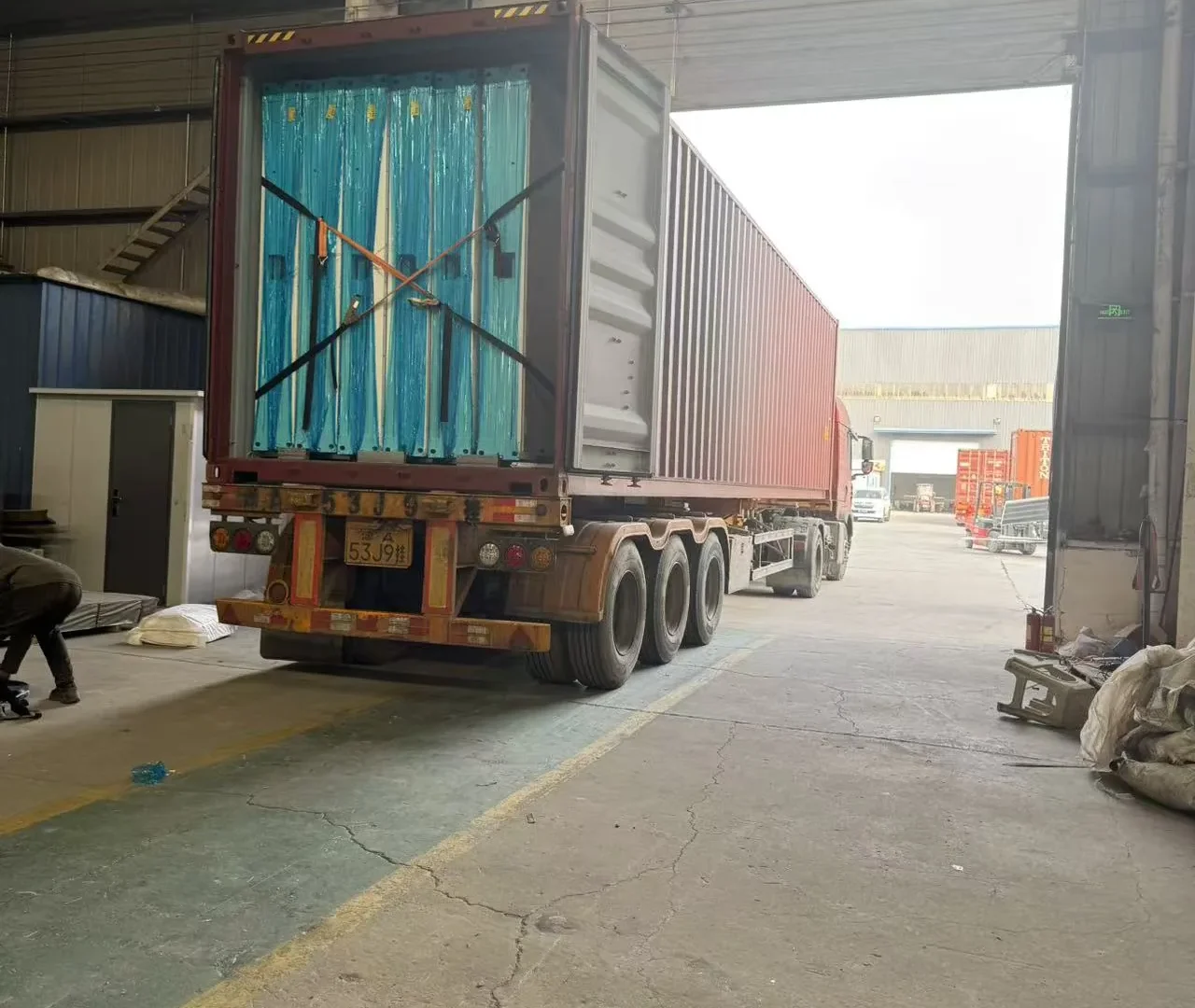
TL;DR: Folding container house 40HQ loading tops out at 14 units for the Compact Mid-Fold model, folded to a 320 mm profile, and 10 units for the Rapid Z-Fold. One container movement divides by fourteen, so each unit carries a fraction of the freight a standard expandable pays. The math below comes straight from factory packing specifications.
Ocean freight is the line item that quietly decides whether a modular housing program stacks up. Before dealers and camp operators compare wall panels or floor plans, they ask one question first: how many units travel in a single container? The answer sets your landed cost per unit, and it is where the folding container house 40HQ loading baseline pulls ahead of every other building system we ship. This article walks through the official loading quantities, the container geometry that produces them, the packing sequence that carries folded units through the sea leg, and the per-unit freight arithmetic that follows. Every figure traces back to the same factory packing specifications our loading plans use.
Folding Container House 40HQ Loading: The Official Baseline
Every SunModu unit is engineered backwards from the container. Folded dimensions are the design itself; wall layouts follow. The current quantities, taken from each model’s packing specification:
| Model | Folded pack (mm) | Loading quantity |
|---|---|---|
| Compact Mid-Fold Container House | 5800 × 2470 × 320 | 14 units / 40HQ |
| Rapid Z-Fold Container House | Z-fold flat pack | 10 units / 40HQ |
| F720 Compact Expandable | 5900 × 720 × 2480 | 6 units / 40HQ |
| 10ft Expandable | 2950 × 2150 × 2480 | 4 units / 40HQ |
| 20ft Expandable | 5900 × 2200 × 2480 | 2 units / 40HQ |
| 30ft Expandable | 9000 × 2200 × 2480 | 1 unit / 40HQ |
| 40ft Expandable | 11800 × 2200 × 2480 | 1 unit / 40ft flat rack |
The folding container houses sit at the top of this table for a reason. A mid-fold unit closes to a 320 mm profile, roughly the height of a stack of four kitchen chairs, so fourteen finished rooms slot into one 40HQ high-cube. The same figures live on our container house loading capacity page, kept current as packing specifications change.
Freight is the market side of the table. The Drewry World Container Index, a weekly assessment across eight east-west lanes, put the composite rate at $4,389 per 40 ft container on 5 November 2026 (Drewry World Container Index). Whatever the market does next, every dollar of a container movement is shared by whatever sits inside the box, which is why the count column matters more than any other number on the page.
How Does the Geometry Put Fourteen Units in One Box?
The answer starts with the box. A standard 40 ft high-cube container measures 12.032 m long, 2.352 m wide and 2.698 m high inside, which works out to roughly 76.4 cubic meters of usable space. A folded mid-fold pack measures 5800 × 2470 × 320 mm, about 4.58 cubic meters. Laid flat, the pack is 118 mm wider than the interior, so it travels standing on its long edge instead.
On edge, each pack occupies a 5800 × 320 mm footprint and stands 2,470 mm tall, clearing the 2,698 mm interior with room for lashing. Seven packs side by side take 2,240 mm of the 2,352 mm width. Two of those columns placed end to end take 11,600 mm of the 12,032 mm length. Two columns of seven: fourteen units, with the remainder left as forklift and lashing clearance.
| Check | Pack side | Container side | Result |
|---|---|---|---|
| Packs across the width | 7 × 320 mm = 2,240 mm | 2,352 mm | Fits |
| Columns along the length | 2 × 5,800 mm = 11,600 mm | 12,032 mm | Fits |
| Pack height on edge | 2,470 mm | 2,698 mm | Fits |
| Total pack volume | 14 × 4.58 m³ = 64.2 m³ | 76.4 m³ interior | About 84% cube use |
Weight rarely becomes the constraint. Fourteen packs at 1,000 kg gross add about 14 tonnes of cargo; set against the roughly 30,480 kg maximum gross rating that ISO standards assign a 40 ft box, the program runs out of cube long before it runs out of payload. That is why the folded profile is the number to watch on a folding container house 40HQ loading plan. Container walls and floors carry no vertical stacking load at all; the four corner posts take the entire rating.
The Per-Unit Freight Math
The arithmetic is simple enough to run on one line:
Freight cost per unit = (one container movement) ÷ (units loaded)
One ocean freight quotation, whatever your lane and season dictate, is spread across the units inside. Load two 20ft expandables and each unit carries half the container leg. Load fourteen mid-folds and each carries one fourteenth. Same vessel, same documentation, same port handling: the folding system divides the fixed cost of moving a box across the ocean by a factor of seven against a 20ft expandable program.
Run the division on the current index as an illustration. At the $4,389 composite referenced above, a container of fourteen mid-folds assigns about $314 of ocean freight to each unit; the same box moving two 20ft expandables assigns about $2,195 to each. Index rates are a market reference, and contracted all-in rates vary with lane, season and fuel surcharges, so treat the split as a planning figure and let the quotation confirm the booked rate.
Two practical notes round out the math:
- Cube runs out before payload. Fourteen mid-fold units at 1,000 kg gross total around 14 tonnes, well under what the box is rated to move, so the folded profile is the binding constraint on any folding container house 40HQ loading plan.
- The ratio holds on the domestic leg too. A full container travels from port to site as one truck movement; fourteen units arrive in one delivery.
How Does a Folded Pack Survive the Sea?
Loading density means nothing if units arrive damaged, so packing is specified per model. Each unit is flat-packed in its folded state, wrapped in stretch film with foam edge protection and corner guards, then stacked and lashed inside the container by the packing team. Inside the 40HQ, the 320 mm packs interleave so the load rides out with minimal wasted cube, and every pack is secured before the doors close. The 30ft and 40ft expandables travel as single units on flat racks or open-top containers with steel strapping added to the same protective package.
The sequence follows the principles set out in the IMO CTU Code, the joint IMO, ILO and UNECE code of practice for packing cargo transport units: distribute the load across the floor, brace it against movement, and lash it so nothing shifts when the vessel rolls. Offloading is planned before the container sails. Most models specify a forklift or crane of at least 5 ton capacity, the compact expandables manage with 3 ton, and the 30ft and 40ft call for 8 and 10 ton cranes per the packing tables. The shipping and packing process page details the wrapping, lashing and handling requirements model by model.
On the packing line, the folded unit is treated as cargo from the moment it leaves the assembly bay. The frame edges get foam, the corners get guards, and the film wrap goes on tight enough to stop panel chafe inside the closed profile. Packs then enter the container column by column in the sequence the loading plan sets, standing nested so their profiles interleave, with lashing checked tier by tier until the last pack is locked and the doors are sealed. It is repetitive, deliberate work, and it is the reason a 40HQ opened at destination looks the way it did in the factory photos.
Why Do Mid-Fold and Z-Fold Load Differently?
Both folding models ship as flat packs, but they close differently and the container count shows it. The Compact Mid-Fold folds centrally around its own frame and closes to a 320 mm profile, the thinnest pack in the range, so fourteen stand in one 40HQ. The Rapid Z-Fold uses a Z-shaped sequence in which structural sections interleave for transport; those sections occupy more cube per unit, so ten travel where fourteen mid-folds fit. Neither approach is wrong; each suits a different program, and the loading table shows the cost of that choice in units per box.
| Spec | Compact Mid-Fold | Rapid Z-Fold |
|---|---|---|
| Units per 40HQ | 14 | 10 |
| Closed profile | 5800 × 2470 × 320 mm | Z-fold flat pack, dims per spec sheet |
| Expanded area | 14 m² | Per current specification sheet |
| Install crew | 4 to 5 per unit | 4 to 5 per unit |
| Typical install time | 6 to 8 hours | 6 to 8 hours |
| Wind rating | Per specification sheet | Grade 10 |
| Electrical | CE-certified (63A RCD + MCB) | CE-certified, 12 kW |
What Does Fourteen Per Container Mean for a Camp Program?
For mining camps, workforce accommodation and emergency programs, the loading table is the business case. A 200-person camp built from mid-fold units moves in about fifteen 40HQ loads; built from standard-width modules, the same program can double or triple the container count, and the freight, port fees and trucking that follow them. The folding systems deploy with a 4 to 5 person crew in 6 to 8 hours per unit using basic tools, so the site side keeps pace with the containers.
The demand behind that math is durable. Australia’s mining industry employed 241,000 people at the end of June 2025, and camp accommodation refreshes on multi-year cycles across remote resources regions (Australian Bureau of Statistics). Programs at that scale buy container movements, so the unit count per box decides feasibility before the first wall panel is compared.
A program brief with headcount, unit mix and destination port is what a loading plan and quotation are built from. Per-container loading plans, freight estimates, MOQ, warranty terms and delivery schedules are all confirmed in quotation, so the numbers you plan around are the numbers that ship.
Frequently Asked Questions
How many folding container houses fit in a 40HQ?
Fourteen for the Compact Mid-Fold, folded to 5800 × 2470 × 320 mm, and ten for the Rapid Z-Fold. That folding container house 40HQ loading baseline comes from each model’s factory packing specification and is the number the loading plans are built on.
What goes into a folding container house 40HQ loading plan?
The unit mix, the destination port and your schedule. A loading plan sets the pack sequence, lashing and offloading equipment per model, and it travels with a freight estimate and quotation; final freight is confirmed at booking, and MOQ and warranty terms are confirmed in quotation.
Is a folding house cheaper per unit than an expandable house?
On freight, usually yes: 14 or 10 units per container against 2 for a 20ft expandable. The trade-off is interior volume after deployment, since a 20ft expandable opens to 38.2 m² of finished space. Which system wins depends on whether your program is headcount-driven or living-standard-driven.
How much does a folded folding container house weigh?
The Compact Mid-Fold is about 1,000 kg gross per pack, so a full container carries around 14 tonnes of cargo and offloads with a forklift or crane of at least 5 ton capacity. One container is one truck delivery to site, whatever the unit count inside it.
Why can flat-packed folding houses use more of the container cube?
Geometry. Folded packs stand on their long edge, so seven 320 mm profiles fit across the width and two columns fit along the length, using roughly 84% of a 40HQ’s interior volume. Bulkier packs reach the same walls with fewer units inside them.
Plan your own load: the container load calculator works out containers, weight and handling from the same factory loading data.